It’s 6:15 in the morning. You step into the shower, expecting hot water, and get a blast of cold instead. Maybe you yelp. Maybe you just stand there, betrayed. Either way, your day is off to a rough start.
I’m Roberto Luongo — licensed plumber with 25-plus years in the trade, former owner of Bosco Plumbing here in Guelph (sold in 2018), and now I advise homeowners through Residential Plumbing Consultants. I’ve responded to hundreds of “no hot water” calls over the years. A good chunk of them were fixed in under 30 minutes without a service bill.
This guide walks you through exactly what to check, in the right order. We’ll cover gas and electric heaters, Guelph-specific issues like our notoriously hard water, Ontario rental units, and when repair stops making financial sense.
Key Takeaways
- Start with the simple stuff: a tripped breaker or a dead pilot light causes most cold-water emergencies.
- Guelph’s water is among Canada’s hardest (359–564 mg/L), so your heater needs flushing every 12–18 months — not the national guideline of 3–5 years.
- If your unit is rented through Enercare or Reliance, call them, not a plumber — it’s their equipment to fix.
- The “50% rule”: if a repair costs more than half the price of a new unit, replace it. Ontario tank replacement runs $1,600–$2,800 in 2026 (Go Lime Ontario).
- Marginal heaters often fail in January — Guelph’s incoming cold water drops to 4–7°C in winter, which pushes struggling units over the edge.
For ongoing water heater maintenance beyond emergency fixes, see our guide on common plumbing issues homeowners can fix themselves.
Is Your Water Heater Actually the Problem?
Before you assume your water heater is dead, rule out two faster fixes. According to InterNACHI, conventional tank water heaters last 6–12 years on average — but a unit that’s three years old shouldn’t just die on a Tuesday morning without a reason. A closed shutoff valve or a frozen supply line can mimic a failed heater perfectly.
Check the cold-water shutoff valve on the pipe feeding your water heater. It should be fully open — handle parallel to the pipe for ball valves, or fully counter-clockwise for gate valves. If someone did plumbing work recently and didn’t reopen it all the way, that’s your culprit right there.
Next, confirm the problem is your whole house, not just one tap. Run the hot water at two or three different fixtures. If one runs lukewarm and another runs cold, you might have a mixing valve issue at a fixture rather than a water heater failure. That’s a much cheaper fix.
Once you’ve confirmed the heater is the issue, the diagnostic path splits cleanly: gas or electric. The checks are completely different, so knowing which type you have is step one.
How Do You Check a Gas Water Heater Pilot Light?
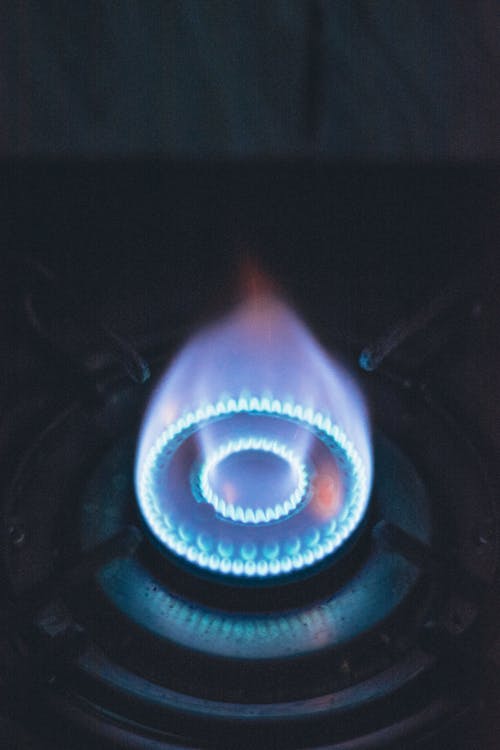
A dead pilot light is the single most common reason a gas water heater stops producing hot water. According to Alpine Intel’s analysis of StrikeCheck data (2022), wear and tear accounts for 27% of all water heater failures — and thermocouple failure is one of the most frequent wear items on gas units. The good news: relighting a pilot is something most homeowners can do safely in five minutes.
Here’s the process. First, locate the gas valve on the front of your heater. Turn it to the “PILOT” position. Press and hold the red reset button (or the gas valve knob itself, depending on the model) and simultaneously press the igniter button repeatedly until you see a small blue flame at the pilot burner tube. Hold that button for 30–60 seconds after the flame appears. Then release slowly and turn the valve to “ON.”
If the pilot lights but won’t stay lit after you release the button, that’s a thermocouple problem. The thermocouple is a small metal probe that sits in the pilot flame. It generates a tiny electrical signal that tells the gas valve the flame is real. When it wears out, the valve shuts off gas as a safety measure. Replacement parts cost $20–40 at any hardware store, and a plumber can swap one in under an hour.
Here’s a story I still tell. Back at Bosco, we got a call from a family on Kortright Road — no hot water, middle of February, three kids under ten. I drove out expecting something serious. The pilot was out. I relit it, waited to confirm the thermocouple was holding the flame, and it died again. Classic failing thermocouple. I had a replacement on the truck. Twenty minutes later, hot water. The homeowner looked at me like I’d performed surgery. The whole job was a $65 service call. She’d been heating water on the stove for her kids’ baths for two days.
Here’s the insider distinction most articles skip. If the pilot lights and stays lit but the main burner won’t ignite, that points to the gas valve itself — not the thermocouple. Gas valves are $150–400 in parts alone. At that cost, I often recommend weighing repair against replacement, especially if the unit is 8 or more years old. Don’t let a technician replace a gas valve on a 12-year-old heater without having that conversation first.
How Do You Reset an Electric Water Heater’s Breaker?
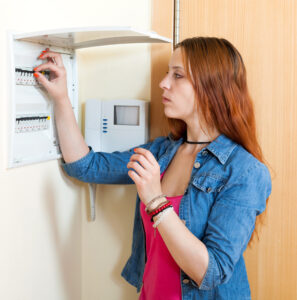
Electric water heaters account for roughly 48.4% of Canadian residential units, according to Natural Resources Canada (2020). When one goes cold, the first check is always the breaker panel. Electric heaters draw significant amperage, and a power surge or faulty element can trip the breaker instantly — no warning, no noise.
Find your main electrical panel, usually in the basement or utility room. Look for a double-pole 30-amp breaker labelled “Water Heater” or “HWT.” A tripped breaker sits in the middle position — not fully on, not fully off. Push it firmly to the OFF position first, then flip it back to ON.
Wait 30–60 minutes before testing the hot water. Electric elements take time to reheat a full tank. If the breaker trips again immediately, stop. Do not reset it a second time — call a licensed electrician. A breaker that keeps tripping means the heating element has likely shorted, the thermostat has failed, or — worst case — there’s a wiring problem. Repeatedly resetting a tripping breaker risks a fire.
Electric heaters also have a high-limit reset button, sometimes called a thermal cutout, on the upper thermostat behind an access panel on the side of the tank. If the breaker is fine but there’s still no hot water, press that button firmly. You should feel and hear a small click. This is a separate safety device and it trips independently of the breaker.
Could Sediment Be Choking Your Water Heater?
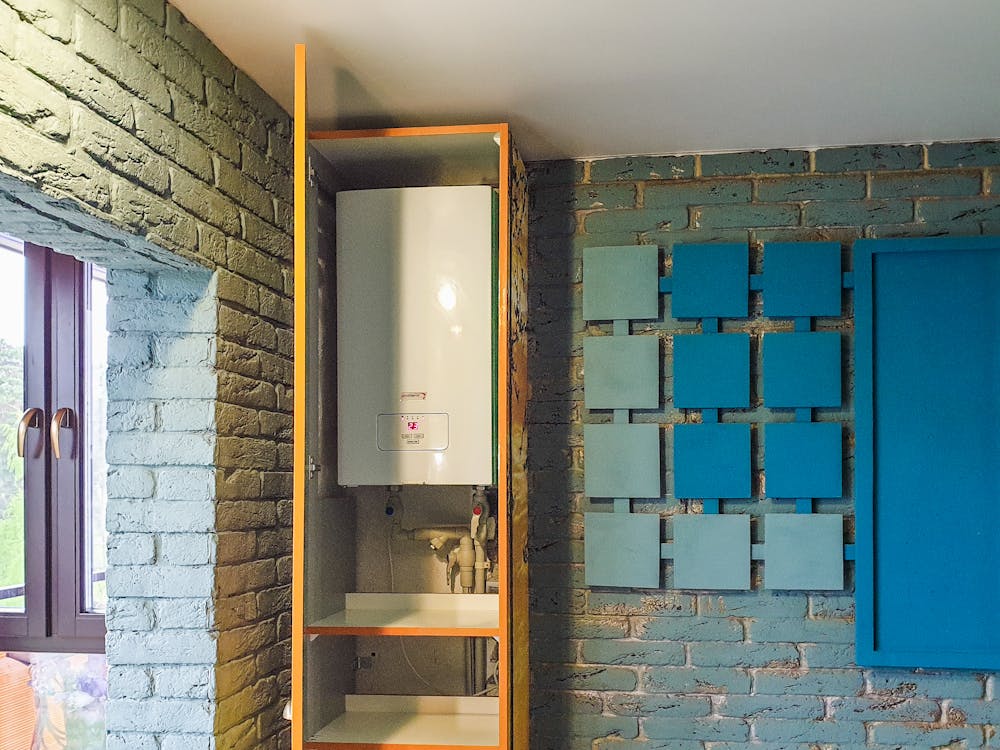
Guelph’s water hardness sits at 359–564 mg/L (21–33 GPG) — classified as “extremely high” and among the hardest municipal supplies in Canada, according to Quinn Water Systems citing City of Guelph data (June 2024). Roughly 90% of Guelph’s water supply comes from groundwater, which picks up calcium and magnesium as it moves through limestone. Every litre that passes through your water heater leaves a small mineral deposit behind.
Over time, that sediment forms a thick layer at the bottom of the tank. On gas heaters, it insulates the water from the burner, so the unit runs longer to reach temperature — and eventually can’t keep up at all. On electric heaters, sediment buries the lower element, causing it to overheat and fail prematurely. You’ll often hear a rumbling or popping sound before performance drops noticeably.
The national guideline says flush your tank every 3–5 years. In Guelph, I recommend every 12–18 months. That’s not me being cautious — it’s what the hardness numbers demand. I’ve pulled tanks out of Guelph homes that looked like the inside of a kettle after just four years without flushing. The sediment layer was over two inches thick.
To flush the tank yourself: turn the thermostat to “pilot” or off, connect a garden hose to the drain valve at the base of the tank, run the hose to a floor drain or outside, open a hot water tap somewhere in the house to let air in, and open the drain valve. Let it run until the water runs clear. The whole job takes 30–45 minutes.
One more Guelph-specific issue worth knowing: dip tube failure. The dip tube is a plastic pipe inside the tank that directs cold incoming water to the bottom, keeping it separate from the hot water at the top. In heaters roughly 8–15 years old, this tube can crack or disintegrate. When it does, cold water mixes directly into the hot water at the top of the tank. The result is consistently lukewarm water — not stone cold, just never hot enough. Many homeowners assume it’s a failing element or thermostat and spend money on the wrong fix.
Is Your Water Heater Rented? Ontario Homeowners, Read This First
Water heating accounts for 19.3% of energy use in the average Canadian home — the second-largest consumer after space heating, according to Natural Resources Canada. That explains why rental programs from providers like Enercare and Reliance have been so popular in Ontario for decades. If you’re renting your water heater, the repair and replacement process is completely different — and this is where a lot of homeowners waste money calling a plumber unnecessarily.
Check your utility bill or the sticker on your water heater. If you see a monthly rental charge from Enercare or Reliance (typically $22–55/month for a tank, $40–98/month for tankless in 2026, per current Enercare and Reliance pricing), the unit belongs to them. Call their customer service line, not a plumber. They are contractually obligated to repair or replace the unit. Calling a plumber to fix rented equipment can also void your rental agreement.
Are you a tenant, not a homeowner? Under the Ontario Residential Tenancies Act, landlords are required to maintain rental units in a good state of repair — and that includes hot water supply. If you’re renting your home and the landlord owns the water heater, they must repair it promptly. Document your request in writing (text or email). If they don’t act within a reasonable timeframe, you can file a T6 maintenance application with the Landlord and Tenant Board.
Source: InterNACHI — nachi.org/life-expectancy.htm
The industry standard for this decision is called the 50% rule: if the estimated repair cost exceeds 50% of the replacement cost of a comparable new unit, replace it. According to Go Lime Ontario (2026), Ontario replacement costs are roughly $1,600–$2,400 for an electric tank, $1,800–$2,800 for a gas tank, and $3,900–$6,500 for a tankless unit. So if you’re looking at a $900 repair on a 10-year-old gas tank, the math says replace it.
Age matters too. A unit under 6 years old is worth repairing unless the tank itself is leaking — a leaking tank is always a replacement, never a repair. Units over 10 years old are candidates for replacement on any significant repair. According to Alpine Intel citing IBHS data, 69% of water heater failures involve a slow leak or sudden burst, and the average water damage claim from a water heater failure runs $4,444. That’s a powerful argument for not delaying a replacement on a unit that’s clearly declining.
Here’s the Guelph seasonal reality: January is when marginal water heaters fail. Cold water entering your home from the groundwater supply drops to 4–7°C in winter, compared to roughly 18°C in July. Your heater has to work much harder to hit the standard 49°C (120°F) setpoint. A unit that’s been limping along with sediment buildup, a weak element, or a partially failed thermostat often holds on through autumn — then gives up in the coldest week of the year. If your heater is showing signs of age, address it before November.
On energy efficiency: if you’re replacing anyway, it’s worth knowing that an ENERGY STAR certified tankless unit saves roughly 30% on water heating costs compared to a conventional tank, and a heat pump water heater saves up to 50% compared to a standard electric tank, according to Natural Resources Canada. Water heating is 19.3% of a Canadian home’s energy budget — so those savings add up quickly over a 15–20 year lifespan.
Frequently Asked Questions
How long does it take for a water heater to reheat after running out?
A standard 40–60 gallon gas tank typically reheats in 30–40 minutes. Electric tanks take longer — usually 60–80 minutes for a full recovery. Tankless units produce hot water on demand with no recovery time, which is one of their biggest practical advantages in a busy household. If your tank is taking significantly longer than these benchmarks, sediment buildup or a failing element is slowing it down.
Why is my water lukewarm instead of fully cold or hot?
Consistently lukewarm water — not stone cold, just never quite hot — is the signature symptom of a failed dip tube. It’s a plastic pipe inside the tank that keeps cold incoming water at the bottom. When it breaks down (common in units 8–15 years old), cold water mixes into the hot water at the top. It’s often misdiagnosed as a thermostat problem. A plumber can confirm it quickly and replacement parts are inexpensive.
Is it safe to leave a tripped water heater breaker off overnight?
Yes — leaving the breaker off is the safest choice if it keeps tripping. A breaker that trips repeatedly is telling you something is wrong with the circuit or the heater itself. You can use cold water safely overnight. What’s not safe is repeatedly resetting a breaker that keeps failing, as that risks overheating the wiring. Call a licensed electrician or plumber the next morning to diagnose the problem properly.
Should I flush my water heater myself or hire a plumber?
Most homeowners can flush a tank heater themselves — it’s a straightforward 30–45 minute job with a garden hose and a floor drain. The exception is a heater that hasn’t been flushed in 5-plus years. Heavy sediment can clog the drain valve and leave it stuck partially open. If that happens mid-flush, you’ll need a plumber to sort it out. In Guelph’s hard water, flushing every 12–18 months keeps the process simple and the valve working freely.
What does it mean if my water smells like rotten eggs when I run hot water?
That sulfur smell usually means bacteria have colonized the tank, often after a period of low use or if the temperature has been set too low (below 49°C). It can also result from the sacrificial anode rod reacting with Guelph’s hard water. The fix is usually a full tank flush, followed by a disinfection cycle at higher temperature. If the smell persists, the anode rod may need replacing. Don’t ignore it — the smell indicates bacterial growth in your water supply.
The Bottom Line
Most “no hot water” emergencies have a straightforward explanation. Work through the checklist in order: shutoff valve, pilot light or breaker, high-limit reset, sediment buildup. Check whether your unit is rented before calling anyone. If you’ve done all that and still have cold water, the unit likely needs a professional diagnosis.
If your heater is over 10 years old and showing any of the warning signs we’ve covered — slow recovery, rumbling sounds, lukewarm output, or visible rust near the base — don’t wait for a full failure. A burst water heater causes an average of $4,444 in water damage, per Alpine Intel citing IBHS research. A planned replacement is always cheaper than an emergency one plus a flood cleanup bill.
In Guelph especially, our hard water is a real factor. Flush annually, check the anode rod every few years, and know where your shutoff valve is before you need it in a hurry. Small habits protect big investments.
And if you’re facing a basement flooding emergency along with water heater issues, here’s what to do when your basement is flooding.
If you’re also dealing with a clogged drain that’s slowing down your ability to flush the system, here’s how to unclog a drain without calling a plumber.
Still no hot water? If you’ve worked through this checklist and your water heater still isn’t cooperating, it’s time to call in a licensed plumber. Find a trusted Guelph plumber who can diagnose and fix the problem the same day.